
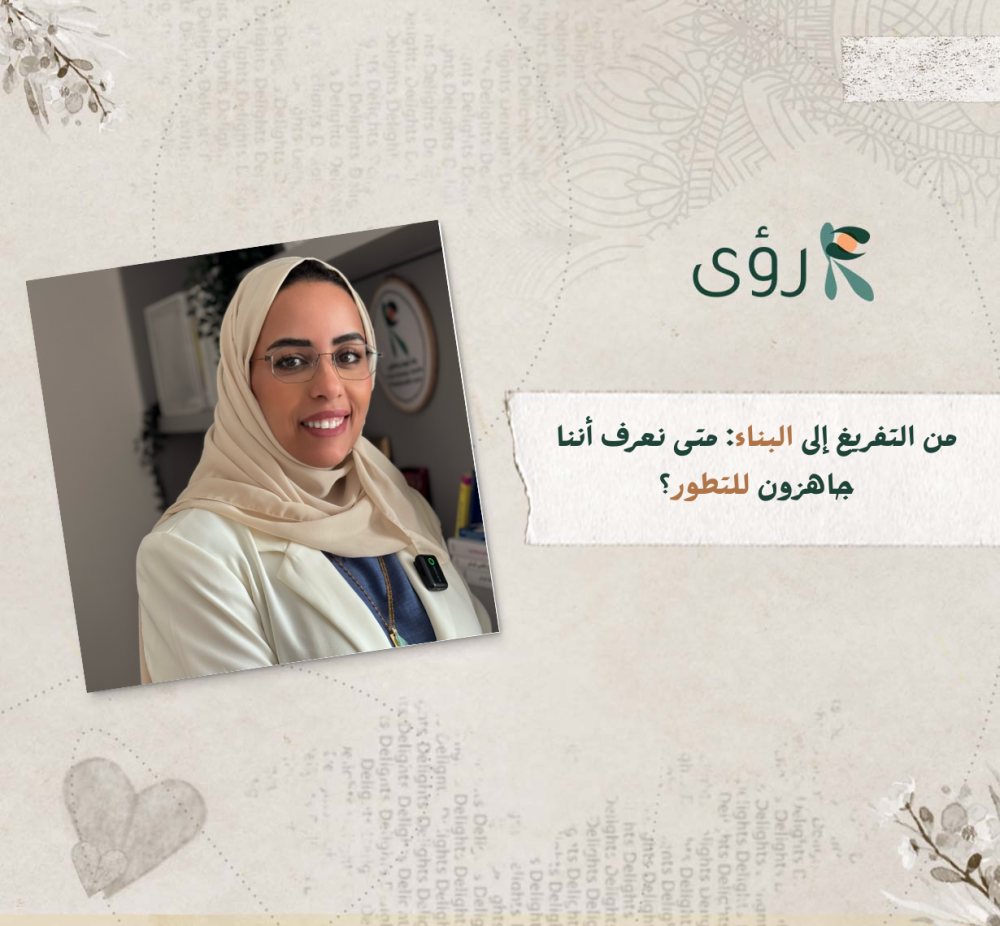
Many people begin their healing journey from one point: pain.
Psychological pain, old trauma, accumulated pressure, or a constant feeling of inner heaviness.
This is where editing sessions come in as a necessary stage, relieving the burden and opening up space to breathe.
But the most important question is often not asked:
When will we be done? When will we be free from trauma?
When do we know that it is time to move from emptying... to building?
Liberation is not the end of the journey
Trauma release sessions, emotional catharsis, or working on the body and emotions, play a crucial role:
- Breaking down limiting beliefs
- It relieves emotional tension.
- It calms the nervous system
- Restores the feeling of security
Liberation removes what hinders you and demolishes buildings erected on your land without your knowledge or permission, while development builds what carries you forward, new buildings of your choice.
Furthermore, we shouldn't stop liberating ourselves, nor should we consider it the end of the journey. The ground that has crumbled from our previous structure needs rebuilding. It will require liberation from time to time, sometimes intensely, sometimes less frequently, as a form of self-reflection and maintenance. Because what our bodies store is far more than we can ever fully extract, that shouldn't be our primary goal. Liberate and develop to achieve wholeness.
Why are some people afraid of the construction phase?
The reason is not laziness, but rather deep psychological factors, including:
- Fear of responsibility after the pain has subsided
- The unconscious association with suffering as an identity: "the victim role"
- Anxiety about facing life without psychological excuses
- Fear of the new, unknown identity
The difference between unpacking and development
Emotional release:
- It focuses on the past.
- It releases pent-up emotions
- Relieves pain
- Restores basic balance
Conscious self-development:
- It focuses on the present and the future.
- It changes our understanding of events and our actions
- Builds internal skills
- It creates a clear direction
- It transforms awareness into a lifestyle.
Both are important, but each stage has its time.
Signs that you are ready to evolve
There is no set date or fixed number of sessions.
But there are clear internal signs, including:
- Relative calm after the sessions
- Emotions no longer explode as they once did, but are observed and understood.
- New questions arise
- Instead of “Why did this happen to me?”
- The question arises: “What do I want now?”
- A desire for progress, not just comfort
- You feel that rest alone is no longer enough.
- A sense of responsibility
- You realize that your future life is built not only on healing, but also on choices.
- Gradual internal clarity
- Even if the plan isn't perfect, there's a trend.
These signs do not mean that you have completely finished editing.
In fact, you have become capable of building upon it.
What would happen if we moved to development at the right time?
When development begins after editing, completely different results appear:
- Longer emotional stability
- Clearer decisions
- New, more conscious relationships
- Inner confidence that doesn't depend solely on sessions
- Empowerment and a sense of self-leadership
- Greater ability to make decisions
- A better self-image supported by self-love and kindness
Here, healing transforms from a condition into a skill.
The role of development paths after liberation
Conscious development paths, such as emotional intelligence programs or group coaching, do not return you to the pain, but rather:
- It teaches you how not to go back to him
- It gives you tools that prevent re-accumulation.
- Turn past experience into wisdom
- It makes you a partner in your growth, not a recipient.
Here, healing becomes the norm, not the focus.
Brief real-life examples
Many who went through editing sessions and then moved on to development paths noticed:
- They are more understanding of the events in their lives and are able to see another useful side of them.
- Their awareness of emotions has increased, and consequently, their ability to manage them.
- The challenges haven't disappeared, but the way we deal with them has changed.
- Their lives have begun to move and produce.
- They are more emotionally and intellectually balanced.
This is the difference between recovery and growth.
In conclusion: Liberation is a beginning, not an end.
Liberation opens the door.
But development is about going down the road.
If you feel that pain is no longer guiding you,
And that within you there is a space that you want to fill with meaning, not just tranquility.
You are probably ready to move.
Not because you've become perfect,
Rather, it's because you've become aware enough to adopt.
Conscious invitation
Don't stop at what you have freed,
Ask yourself:
What do I want to build now?
From here… a completely different phase begins.